

Langtang Valley Trek
Starting from
US$1195
US$1350
P/P
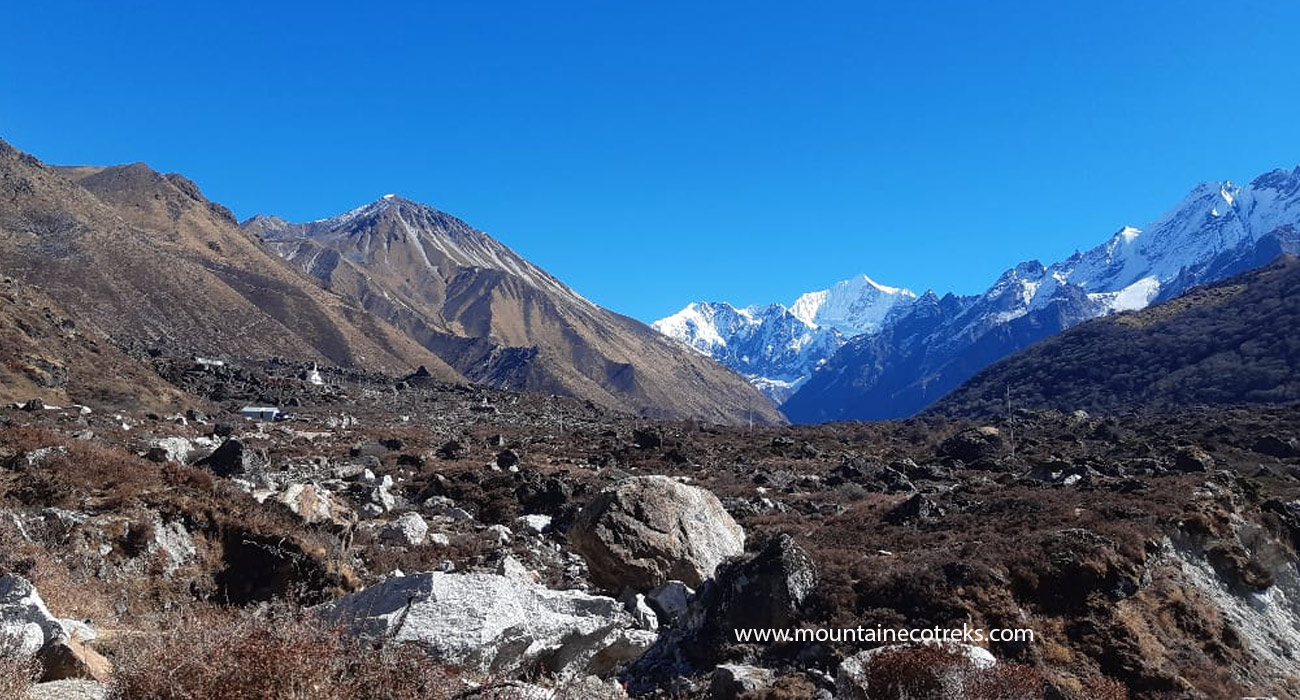
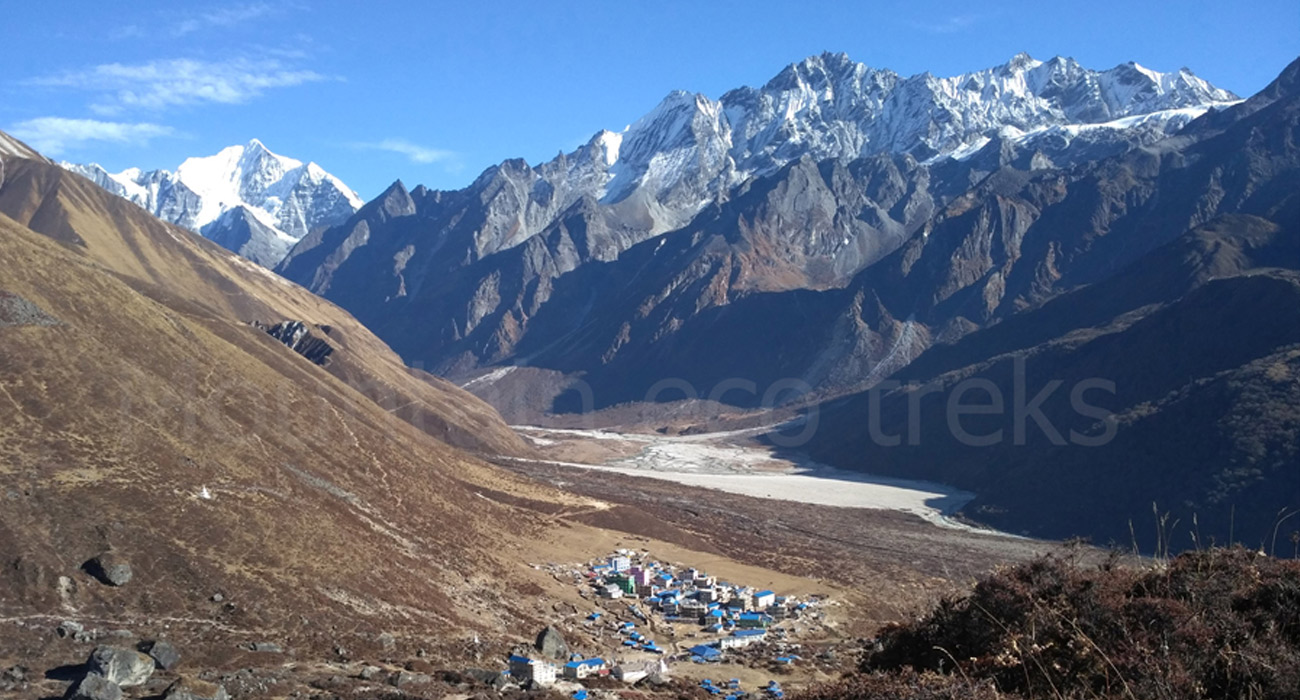
Tucked away north of Kathmandu yet surprisingly easy to reach, the Langtang Valley Trek has a way of catching people off guard. Most trekkers come expecting a quieter alternative to the classic Himalayan routes - and leave wondering why it took them so long to get here. From glacial valleys and traditional Tamang villages to sacred monasteries and snow-capped peaks that stop you mid-step, this is a trekking experience in Nepal that feels entirely its own.
The trail starts at Syabrubesi and stretches through Langtang National Park across roughly 65 to 75 kilometres of some of the most unspoiled terrain in the Himalayas. It climbs gently through bamboo forests and terraced farmlands before the valley opens up wide and the mountains take over completely. This national park is also one of the last remaining habitats of the elusive Red panda - a shy and enchanting creature that has become something of a symbol of this region, occasionally spotted moving quietly through the dense forest undergrowth. Every itinerary is built around proper acclimatization, so the pace never feels rushed - which is exactly how a place like this deserves to be walked.
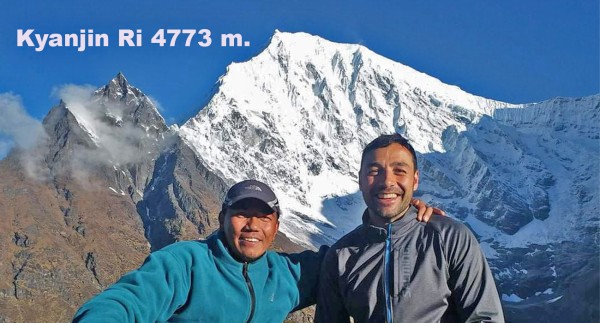
The real soul of the trek is the Tamang cultural experience woven through every village along the way. Prayer flags, ancient chortens, centuries-old gompas - it is all here, lived in and very much alive. The teahouses are run by local families who make you feel genuinely welcome. Rated at moderate difficulty, the highest point at Kyanjin Ri sits at around 4,773 metres, offering views of Langtang Lirung (7,227m), Yala Peak, and the sweeping Langtang Glacier. March to May and October to November remain the best seasons to visit.
Those with extra days often find themselves drawn toward the Langtang - Gosainkunda Circuit Trek, where the sacred Gosainkunda Lake adds a quietly spiritual dimension to the journey - revered by Hindu and Buddhist pilgrims and absolutely breathtaking in person.
Others slow down completely on the Langtang Tamang Heritage Trek, wandering through ancient settlements and trade routes where the culture feels untouched and the monasteries are far more than photo stops - they are living, breathing places of community and worship.
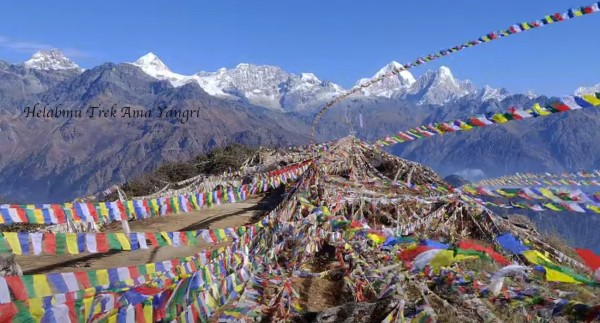
And for those who prefer an easier rhythm, the Helambu Trek delivers sweeping Himalayan views through charming Sherpa and Hyolmo villages at a pace that never overwhelms - effortless walking with a genuine Himalayan heart.
Mountain Eco Treks offers all three alongside the valley trek itself - each route thoughtfully crafted for a different kind of traveller, but all sharing the same honest commitment to the mountains and the people who call them home. As the closest major Himalayan trek to Kathmandu, this is one of Nepal's most spectacular and spiritually rich mountain landscapes- and a journey that genuinely lives up to everything said about it.
You've made it to Kathmandu - the city that never quite lets you go. After landing at Tribhuvan International Airport, your Mountain Eco Treks guide will be waiting to welcome you and take you to your hotel in the heart of Thamel. The rest of the day is yours to soak it all in - wander over to Boudhanath Stupa, feel the energy of Pashupatinath Temple, or climb up to Swayambhunath for your first proper view over the valley. In the evening, sit down with your guide over a cup of tea for a relaxed briefing about the days ahead. Overnight in Kathmandu.
An early start today, but the drive more than makes up for it. The road winds northwest through rice terraces, river gorges, and small mountain villages that feel a world away from Kathmandu's bustle. You'll stop at Dhunche (1,950m) to sort the national park permits and stretch your legs before dropping down to Syabrubesi - a warm, dusty little border town where the Trisuli and Bhote Koshi Rivers meet. A great spot to rest, eat well, and get genuinely excited for tomorrow. Overnight in Syabrubesi.
This is where it begins. You cross the suspension bridge, step inside Langtang National Park, and suddenly the world gets very green and very quiet. The trail follows the Langtang Khola through beautiful forests of bamboo, rhododendron and oak - the kind of forest where you half expect to spot a red panda watching you from the branches. Pass through Bamboo (1,960m) and Rimche (2,400m) as the mountains slowly start to reveal themselves through the trees. Overnight in Lama Hotel.
Today the valley opens up and it takes your breath away - in the best possible sense. The trees thin out, the path rolls through wide yak pastures, and Langtang Lirung (7,234m) fills the northern horizon like a wall of ice and rock. You'll pass the old horse farm at Ghora Tabela (2,970m) and walk beneath strings of prayer flags flapping in the mountain breeze before arriving at Langtang Village. This community rebuilt itself with remarkable spirit after the 2015 earthquake - spending a night here feels meaningful. Overnight in Langtang Village.
A shorter day, but a deeply rewarding one. The trail drifts through high meadows where yaks graze with total indifference to the scenery around them - scenery that is, frankly, extraordinary. Through Mundu (3,450m) and Sindum (3,530m) you arrive at Kyanjin Gompa, a monastery that has sat quietly beneath these peaks for over four centuries. Pop into the yak cheese factory for a taste of something truly local, then take a gentle afternoon walk toward Kyanjin Ri to ease your body into the altitude. Overnight in Kyanjin Gompa.
Give your body the time it needs today - and reward it with one of the best views in the Himalayas. If you're feeling strong, head up to Tserko Ri (5,033m) where Dorje Lakpa, Shishapangma (8,013m) and the full sweep of the Langtang chain stretch out before you in every direction. For a slightly gentler morning, Kyanjin Ri (4,773m) delivers an equally stunning 360-degree panorama over the Tibetan Plateau. Either way, you'll come back to the teahouse feeling like you've earned your dinner. Overnight in Kyanjin Gompa.
Time to turn around and head back down the valley. The trail feels familiar now but somehow different - the light falls differently in the morning, and you notice things you missed on the way up. Stop for lunch in Langtang Village, say goodbye to the peaks as the forest slowly swallows the trail again, and arrive at Lama Hotel with tired legs and a full heart. Trekking poles will be your best friends today. Overnight in Lama Hotel.
The last day of walking, and it's a good one. The trail drops back through the rhododendron and bamboo forest as the air grows warmer and the birdsong gets louder. Keep an eye on the bamboo - red pandas have a habit of appearing exactly when you're not looking for them. By the time Syabrubesi comes into view, the smell of dal bhat from the teahouses and the thought of a hot shower will carry you the last few kilometres. You've walked the Langtang Valley. Overnight in Syabrubesi.
One last mountain road, one last look back at the hills before the city pulls you in. The drive rolls back through Dhunche and along the Trisuli River, and by mid-afternoon Thamel's familiar chaos is waiting to welcome you home. Your Mountain Eco Treks guide will see you safely to your hotel, and the evening is yours - whether that means hunting for souvenirs in Thamel's lanes or sitting down to a long, well-deserved farewell dinner with the people you've shared this journey with. Overnight in Kathmandu.
Service Types
Compare the available package types and choose the service level that matches your comfort, budget, and support needs.
Standard Package Cost
US$ 1195 per person
Budget Package Cost
US$ 699 per person
The Langtang Valley Trek is one of Nepal's most loved trekking routes, sitting inside Langtang National Park - just 51 km north of Kathmandu. People call it the "Valley of Glaciers" for good reason. You'll walk through rhododendron forests, pass through traditional Tamang villages, and wake up to jaw-dropping views of Langtang Lirung (7,227 m). It's the kind of trek that stays with you long after you're back home.
The standard trek takes 8 to 10 days, including travel from Kathmandu. Most trekkers spend 7–8 days on the trail, with Kyanjin Gompa (3,830 m) as the turnaround point before heading back.
The two best windows are:
Try to avoid the monsoon (June–August) - the trails get slippery and leeches are everywhere.
It's rated Moderate - no technical climbing, no ropes, no special skills needed. You'll walk around 5–7 hours a day on well-marked paths. If you're reasonably fit and enjoy hiking, you'll handle this trek just fine.
You need one permit to enter the trek:
| Permit | Cost |
|---|---|
| Langtang National Park Entry Permit | USD 20 per person |
This is arranged in Kathmandu before you head out. At Mountain Eco Treks, we handle all permit paperwork for you - nothing to stress about.
The highest overnight stop is Kyanjin Gompa at 3,830 m. If you're feeling strong, the optional hike up Tsergo Ri (5,033 m) gives you a full 360° view of the entire Langtang range - truly unforgettable on a clear morning.
It can be, especially above 3,000 m. That said, the risk is manageable if you go slow, drink plenty of water, and rest when your body tells you to. We build an acclimatization day into the itinerary at Kyanjin Gompa for exactly this reason. If symptoms get worse, descend - don't push through it.
When you book with Mountain Eco Treks, your package covers:
Not included: international flights, travel insurance, personal spending, and tips for your guide and porter.
Yes - don't skip this one. You need a policy that covers:
Keep a printed and digital copy with you on the trail. It's the one thing you hope you never need but will be very glad you have.
You don't need to overpack - just bring the right things:
You'll sleep in teahouses - warm, friendly, family-run lodges dotted along the entire route. Rooms are simple (twin or dorm style) but comfortable. Most places serve hot food, and you can usually get a hot shower, WiFi, and charge your devices for a small extra charge.
A guide is not legally mandatory, but we honestly recommend having one. The trail can get confusing in places, weather changes fast, and having a local guide with you means you've got someone who knows the area, speaks the language, and can handle anything unexpected. Our guides at Mountain Eco Treks are licensed, first-aid trained, and genuinely love what they do - it makes a real difference to your experience.
| Package Type | Cost (Per Person) |
|---|---|
| Budget | USD 650–800 |
| Stander / Private | USD 1,200–1,800+ |
Cost depends on group size, the level of service, and add-ons. At Mountain Eco Treks, we're transparent about pricing - no hidden fees, ever. Reach out for a custom quote.
Absolutely. It's one of the best first Himalayan treks you can do. The path is well-marked, the elevation climbs gradually, and the distances each day are very manageable. Just give yourself 4–6 weeks to build fitness beforehand - regular hikes, jogging, or cycling all help - and you'll be ready.
| Feature | Langtang Valley | Everest Base Camp | Annapurna Circuit |
|---|---|---|---|
| Duration | 8–10 days | 12–14days | 11–16 days |
| Max Altitude | 5,033 m | 5,364 m | 5,416 m |
| Difficulty | Moderate | Moderate–Strenuous | Moderate–Strenuous |
| Crowds | Low | Very High | High |
| Distance from KTM | 51 km (3–4 hrs drive) | ~130 km (walking distance ) | ~150 km |
| Cost | Budget-friendly | Most expensive | Moderate–High |
If you want real Himalayan magic without the crowds, the long travel, or the big price tag - Langtang is your answer. It's the most underrated trek in Nepal, and at Mountain Eco Treks, it's one of our personal favorites to guide.
Foreign nationals can obtain a Nepal tourist visa on arrival at Tribhuvan International Airport or at designated land border entry points from India and Tibet. Travelers can also apply for an online visa in advance through the official immigration system.
Nepal Tourist Visa Requirements
To apply for a Nepal visa, travelers need:
Nepal Tourist Visa Fees
Visa fees and rules may change as per Nepal Immigration regulations.
Nepal Visa Extension
Tourist visas can be extended at the Department of Immigration in Kathmandu.
Advice to Travelers
Trekking Permits in Nepal
Trekkers visiting national parks, conservation areas, and restricted regions such as the Everest Region, Annapurna Region, and Manaslu Region require trekking permits. Some restricted areas also require special permits issued through a registered trekking agency in Nepal.
Plan Your Nepal Adventure with Mountain Eco Treks
Mountain Eco Treks is a trusted local trekking and tour company based in Nepal, offering professional trekking, tour, climbing, and adventure travel services across the Himalayas.
We organize:
Our team provides complete travel support, including permits, transportation, accommodation, and guided trekking experiences across Nepal.
Contact Mountain Eco Treks
For official Nepal visa information, visit: https://immigration.gov.np/?utm_source=chatgpt.com
Mountain Eco Treks & Expeditions (P) Ltd is a Nepal Government-registered trekking company based in Kathmandu, operating tours and expeditions across Nepal, Tibet, and Bhutan. Please read these terms before booking.
We accept Visa, Mastercard, and bank wire transfer. Additional bank charges may apply.
All cancellations must be made in writing.
| Notice Period | Charge |
|---|---|
| 50+ days | Deposit retained |
| 30 days | 50% of total |
| 2 weeks | 75% of total |
| 1 week or less | 100% - no refund |
A 20% non-refundable deposit applies to all cancellations. No refund is issued for incomplete trips or early departures from the itinerary.
If we cancel due to weather, natural disaster, or unrest, we offer an alternative trip or a full refund. Any personal expenses (flights, visas) remain your responsibility.
Himalayan travel involves unpredictable weather, road conditions, and remote flight routes. We minimize disruptions where possible, but extra costs during delays are the client's responsibility. No refunds for itinerary changes beyond our control.
By booking with us, you agree to all terms above.
Mountain Eco Treks & Expeditions (P) Ltd 🌐 www.mountainecotreks.com
Mountain Eco Treks is a licensed local Nepal trekking company based in Kathmandu, founded by Ram Bahadur Tamang, a mountain leader with more than 15 years of trekking and expedition experience across Nepal and Tibet. Registered with the Nepal Tourism Board (NTB) and TAAN, we provide reliable trekking services with a strong focus on safety, local expertise, and responsible tourism.
We operate as a fully registered trekking company in Nepal with transparent services and recognized tourism affiliations.
Our NTB-certified guides are first-aid trained and have extensive experience leading trekkers on Nepal’s most popular Himalayan routes.
Daily acclimatization monitoring, proper trip planning, and emergency preparedness are part of every trek we organize.
From permits and transportation to accommodation, meals, and porters, we manage the logistics so you can focus on the journey.
No hidden charges and flexible options for private or group treks to suit different travel styles and budgets.
We support eco-friendly trekking practices, local communities, and initiatives that benefit villages and preserve the mountain environment.
| Item | Details |
|---|---|
| T-Shirts | 3–4 moisture-wicking shirts |
| Fleece Jacket | Warm mid-layer for cold mornings |
| Down Jacket | Essential above 3,000 m |
| Waterproof Jacket | Wind and rain protection |
| Trekking Trousers | Quick-dry lightweight pants |
| Wool Socks | 3-4 warm trekking pairs |
| Gloves & Hat | Cold-weather protection |
| Buff / Scarf | Dust and wind protection |
| Item | Details |
|---|---|
| Trekking Boots | Waterproof with ankle support |
| Sandals / Slippers | Comfortable for evenings |
| Item | Details |
|---|---|
| Daypack | 10-15L daily backpack |
| Trekking Poles | Reduces knee strain |
| Water Bottle | Refillable 2-liter bottle |
| Item | Details |
|---|---|
| Passport | Valid 6+ months |
| Nepal Visa | Required for entry |
| Travel Insurance | Includes evacuation coverage |
| Passport Photos | For permits and documents |
| Cash & Card | Local cash recommended |
| Item | Details |
|---|---|
| Painkillers | Headache and muscle relief |
| Anti-Diarrheal | For stomach issues |
| Bandages | Basic injury care |
| Sunscreen SPF 50+ | High-altitude UV protection |
| Lip Balm | Prevents dry lips |
| Prescription Medicine | Personal medical supply |
| Item | Details |
|---|---|
| Headlamp | With spare batteries |
| Sleeping Bag | Suitable for cold temperatures |
| Sunglasses | UV400 protection |
| Water Purification | Tablets or filter |
| Item | Details |
|---|---|
| Mobile Phone | Offline maps recommended |
| Camera | Extra batteries advised |
| Power Bank | High-capacity backup |
| Travel Adapter | Nepal 2-pin plug |
| Item | Details |
|---|---|
| Energy Bars | Quick trail snacks |
| Electrolyte Drinks | Hydration support |
The Langtang Valley Trek falls comfortably into the moderate difficulty category, making it one of the most welcoming high-altitude treks in the Himalayas. Standard itineraries run 9 to 11 days, with daily walking of 5 to 7 hours and elevation gains of 500-1,000 metres per stage. The highest point on the main route is Tsergo Ri (5,033 m), while most trekkers set their sights on Kyanjin Gompa at 3,870 metres.
There is no technical climbing involved. A reasonable level of cardiovascular fitness, a pair of well-broken-in waterproof boots, and a sensible acclimatization plan are honestly all you need. The steepest single day is the climb from Lama Hotel to Langtang Village, gaining around 1,000 metres - tough on the legs, but deeply rewarding when the mountain views open up.
The best seasons for the Langtang Valley Trek are spring (March-May) and autumn (September-November).
For the best all-round experience, plan around October-November or March-April.
The Langtang Valley Trek is one of Nepal's most affordable multi-day treks, and it does not ask you to sacrifice scenery or culture for the price. Compared to the Annapurna circuit trek, which tends to cost significantly more due to its length and permit complexity, Langtang is genuinely kind on the wallet.
| Expense | Estimated Cost (USD) |
|---|---|
| Langtang National Park Permit | $22 |
| Kathmandu-Syabrubesi Transport | $10-$15 |
| Teahouse Accommodation (per night) | $3-$10 |
| Meals on Trail (per day) | $30-$40 |
| Porter (per day) | $20-$30 |
| Guide (per day) | $25-$40 |
| Total (10-day trek) | $750-$1,050 |
Budget-conscious trekkers can complete the route for under $800. Fully organized packages from Kathmandu, such as those arranged by Mountain Eco Treks, typically run $ 850-$1,150 all-inclusive. Keep in mind that teahouse prices climb with altitude, so expect to spend a little more around Kyanjin Gompa.
Every trekker entering Langtang needs a valid Langtang National Park Entry Permit. Checkpoints along the trail verify it, so do not set off without one.
Langtang National Park Entry Permit - approximately USD $22 for international trekkers
How to get it:
If you prefer not to handle the paperwork yourself, Mountain Eco Treks takes care of the entire permit process on your behalf, so everything is sorted before you leave Kathmandu.
The golden rule of packing for Langtang is this - bring what you need, not what you think you might need. Every extra kilogram feels like two by day three.
Clothing: Moisture-wicking base layers, insulating fleece or down jacket, waterproof shell jacket, trekking trousers, warm gloves, beanie, sun hat, wool socks (4-5 pairs)
Footwear: Waterproof ankle-support trekking boots (well broken-in before you go), trekking poles
Gear: 50-65L backpack, sleeping bag rated to -10°C, headlamp with spare batteries, sunglasses (UV400)
Health: Personal first-aid kit, Diamox (consult a doctor first), water purification tablets or UV pen, rehydration sachets, SPF 50+ sunscreen
Documents and Money: Passport copies, trek permit, travel insurance documents (printed and digital), enough Nepali rupees to last the trek - ATMs are only available in Kathmandu and Dhunche
Electronics: Power bank (charging points at teahouses cost extra), camera, universal adapter
Altitude sickness is something every Langtang trekker needs to take seriously. The trail climbs from roughly 1,460 m at Syabrubesi all the way to 5,033 m at Tsergo Ri, and AMS does not care how fit you are - it can hit anyone.
Common AMS symptoms: headache, nausea, dizziness, poor sleep, shortness of breath at rest
More serious conditions:
How to stay safe:
The rule that matters most: if symptoms get worse, go down immediately. Always carry travel insurance that covers high-altitude helicopter evacuation.
Solo trekking in Langtang is completely legal, widely done, and genuinely manageable for experienced hikers. The trail from Syabrubesi to Kyanjin Gompa is well-marked, teahouses sit at comfortable intervals, and the people living and working along the route are used to independent trekkers passing through.
You are probably fine going guideless if: you have done multi-day high-altitude trekking before, you are walking in spring or autumn, and you trust your own judgement when it comes to acclimatization and weather calls.
You should seriously consider hiring a guide if: this is your first trek above 3,000 metres, you plan to explore off-trail routes or go out in winter, or you want a richer understanding of the Tamang culture you will encounter on the way.
Teahouses are where the Langtang trek truly comes alive. They are your shelter, your kitchen, your common room, and often the highlight of the whole day. Rooms are simple - twin wooden beds, foam mattresses, a pillow - but they are clean, and they are warm. Always carry your own sleeping bag, especially above 3,500 metres, where blankets alone will not cut it.
Langtang teahouse food is hearty, warming, and honestly better than most first-timers expect.
Dal bhat - steamed rice, lentil soup, seasonal vegetables, and tangy pickles - is the king of the trail. It is calorie-rich, filling, and comes with unlimited refills at most teahouses. If you find yourself flagging on a long ascent day, dal bhat is almost always the answer.
Other things worth eating:
Appetite often fades above 3,500 metres. Push yourself to eat anyway, particularly carbohydrates, and keep drinking fluids throughout the day. Never drink water straight from streams or taps - use purification tablets or a UV pen and save yourself the misery of a stomach illness mid-trek.
Weather: Get moving early, by 7-8 am at the latest. Aim to reach your destination well before early afternoon, when storms can build quickly
Syabrubesi (1,460 m) is where most Langtang treks begin, and it is reached from Kathmandu in around 5-8 hours depending on how you travel.
Private jeep (recommended): USD $150-$ 200 for the full vehicle; 5-7 hours; by far the most comfortable option. Book through your guesthouse or trekking agency in Kathmandu.
Public bus: NPR 1200-1500 (USD $ 8-10); daily departures from Kathmandu's Gongabu Bus Park; 7-8 hours on winding mountain roads. A budget option, but expect a full and bumpy ride.
The main trekking route: Syabrubesi - Bamboo - Lama Hotel - Langtang Village - Mundu - Kyanjin Gompa
From Kyanjin Gompa, popular extensions include Tsergo Ri, Kyanjin Ri, and the multi-day route to Gosainkunda Lake. The return to Syabrubesi follows the same trail, with private jeeps and shared vehicles heading back to Kathmandu each morning.
Day 1 - Kathmandu to Syabrubesi (1,460 m): An early start, a long mountain drive, and your first teahouse dinner. The trek has officially begun.
Day 2 - Syabrubesi to Lama Hotel (2,470 m | around 6-7 hrs): Through dense subtropical forest, past langur monkeys overhead and the small teahouse settlement of Bamboo below.
Day 3 - Lama Hotel to Langtang Village (3,430 m | around 5-6 hrs): The trees thin, the views open up, and Langtang Lirung (7,234 m) appears for the first time. A day that reminds you exactly why you came.
Day 4 - Langtang Village to Kyanjin Gompa (3,870 m | around 3-4 hrs): Wide alpine meadows, grazing yaks, and glaciers all around. The ancient monastery at Kyanjin Gompa brings a quiet kind of magic to the valley.
Day 5 (Optional) - Tsergo Ri Summit (5,033 m | around 6-8 hrs return): The hardest day, and arguably the best. Views stretch across Langtang Lirung, Dorje Lakpa, and deep into Tibet. Start before sunrise.
Days 6-7 - Descent to Syabrubesi: The trail back looks completely different from this direction. Take your time on the descents and let your knees remind you why trekking poles exist.
Day 8 - Syabrubesi to Kathmandu: Arrive back tired, satisfied, and already thinking about what comes next.
On April 25, 2015, a magnitude 7.8 earthquake shook Nepal to its core. In Langtang Valley, the tremors set off a catastrophic ice and rock avalanche that buried most of Langtang Village within seconds, killing an estimated 350 people - residents, trekkers, guides, and porters among them.
What came after is a story worth telling. Within months of the disaster, survivors, Nepali authorities, international NGOs, and aid organizations began the slow, difficult work of rebuilding. By 2016, the first trekkers were returning to the valley. By 2017, the trail had largely reopened, and teahouses were welcoming guests again.
When you trek in Langtang today, you are part of that recovery. Every meal you order, every room you sleep in, every guide or porter you hire puts real money into the hands of families who choose to stay and rebuild rather than walk away. The valley is not defined by what it lost. It is defined by what it became afterward - and the warmth you will feel from the people here reflects exactly that.
You May Also Like
US$1195
US$1350
P/P
Experience the best of Nepal with expert local guides, carefully planned itineraries, and personalized support from enquiry to departure. Tell us what you want to explore and we will help you build the right trip.
Call us: +9779803926665
Enquire on WhatsApp© 2011 - 2026 All rights reserved. Mountain Eco Treks & Expedition


Valentin S
Germany
Come as a tourist leave as a friend!
19 Dec 2022
I did the Langtang & Gosainkunda Trek with Ram.
Ram is a very friendly, helpful and very knowledgeable guide.
I learned so must about nature, environment, wildlife and the Nepali culture.
Thank you so much for that unforgettable experience.
Source: Trip Advisor
Tim B
Germany
Peaceful Trekking
1 May 2018
Just go with flow. Trekking together with Ram (Owner of Mountain Eco Treks) you will leave Nepal as a friend. It is not only safe it's furthermore fun, full of joy and an authentic Nepal experience. Hiking side by side along some of the remotest path towards or in Himalaya region can literally bringing you back to peace and it's ceasing of your mind when you enjoying an spectacular view at 4800m or even higher altitude, sharing local Dhal Bat (don't dare to taste the real nepaliversion) incl. an Everest Beer and have some nice conversation about the past and the very present is an experience what I enjoying since more then 5 years now bc. of Ram. His more then 13 years lasting guiding experience will lead you to many more better places even of the beaten tracks due his many connections he has with almost everyone in that area plus he with his company takes care of his country thought sponsoring an orphanage in Kathmandu to
Source: Trip Advisor
Evelyn
Germany
Langtang2019
19 Dec 2022
Ich war 9 Tage in der Langtang Region mit meinem Guide Indra unterwegs. Ein wirklich sehr erfahrener und aufmerksamer Guide. Alles war organisiert und ich musste mich nur um das Laufen kümmern. Ich werde ganz sicher meine nächste Tour durch Nepal und das Himalaya Gebirge wieder bei diese Agentur buchen.
Source: Trip Advisor
Jeannegoullieux
Canada
Great experience in Langtang
6 Nov 2018
We had an excellent experience with Dev as a guide for the Langtang Valley 8 days trek.
He was really nice with us and really attentive to our needs. He adapted well to our pace during the day and kept us motivated the whole trip. We had interesting conversations and he was really professional when we had to handle some small uncomfortable situations. We believe that he has a plus compared to other guides. We definitely recommend him for your trek.
Source: Trip Advisor
Veronique c
Australia
BEST AGENCY
8 Sep 2019
My friends and I hiked the Annapurna Base Camp trek and really enjoyed our experience. Our guide was super fun and knowledgeable, the logistics were perfectly planned by the agency (accomodation, transport, etc), price was fair, and we always felt that we could go at our own pace without feeling rushed.
Im planning to come back again to do Everest Base Camp and will for sure reach out to this agency again.
Source : Trip Advisor